Foot Problems – Shin Splints
Shin splints, also known as medial tibial stress syndrome, are a common foot problem that affects many people, especially athletes and runners.
It is characterized by pain along the shin bone (tibia), located on the lower leg’s front part.
Shin splints occur when the shin muscles, tendons, and bone tissue become overworked and inflamed.
This can happen due to various reasons, such as repetitive stress on the legs, improper footwear, sudden increase in activity level, or running on hard surfaces.
The symptoms of shin splints include pain, tenderness, and swelling along the inner part of the shin. The pain may worsen during physical activity and ease with rest.
In severe cases, the pain can become constant and affect daily activities.
It is important to rest and avoid activities that worsen the pain to manage shin splints. Applying ice to the affected area can help reduce inflammation.
Over-the-counter pain relievers may also provide temporary relief.
Wearing proper footwear with good arch support and cushioning can help prevent shin splints.
In some cases, physical therapy or exercises to strengthen the muscles around the shin may be recommended.
It is important to consult a healthcare professional for a proper diagnosis and treatment plan tailored to your specific condition.
Preventing shin splints involves gradually increasing the intensity and duration of physical activity, wearing appropriate footwear, and maintaining a healthy lifestyle.
Stretching before and after exercise can also help prevent muscle imbalances and reduce the risk of shin splints.
If you are experiencing persistent or severe pain in your shins, it is important to consult a healthcare professional for an accurate diagnosis and appropriate treatment.
They can help determine the underlying cause of your shin splints and guide how to manage and prevent future occurrences.
There are two types of shin splints:
Anterior Shin Splints: This type of shin splint causes pain on the front and outer part of the lower leg. It typically occurs when the muscles in the front of the leg (such as the tibialis anterior) become overworked or inflamed.
The muscle in the front of the leg that usually becomes painful is the Tibialis Anterior Muscle, encased in a thin sheath.
This muscle attaches to the foot and flexes your foot upward or back towards the shin, and as long as the foot is in proper alignment with the leg, the muscle functions efficiently and pain-free.
Posterior Shin Splints: This type of shin splint causes pain in the inner part of the lower leg. It is often associated with inflammation or irritation of the muscles and tendons that attach to the inner side of the shin bone.
The muscles most affected in this type of pain are the Soleus and the Tibialis Posterior. In the leg, these muscles are firmly attached around the back of the knee.
They run down the back and the inner side of the leg and attach to the foot. These muscles function efficiently and pain-free if the foot is properly aligned to the leg.
Pain in both areas usually begins as a dull, aching pain after prolonged walking, running, or jumping. If left untreated, the pain becomes sharp and intense with all weight-bearing activities.
The pain may become so intense that people describe the pain as “if the muscle is being ripped off of my bone.”
Rest generally relieves the pain.
Other serious lower leg problems, such as stress fractures, are usually painful even while resting.
However, when the foot is pronated (the foot rolls outward at the ankle, and you walk more on its inner aspect), the Tibialis Anterior Muscle twists within its sheath.
This twisting of the muscle within its sheath can cause tiny tears in the muscle, or the muscle rubs abnormally against its sheath and produce inflammation and pain.
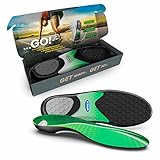
- Sized to fit: no trimming required
- ActivPerform Technology – Reduces shock impact by 40 percent to protect feet and knees
- Size-Specific Arch – Optimal arch support provides precise motion control, helps maximize energy return and promotes your natural gait
- Energy Efficient Dual-Layer Cushioning – Optimizes energy throughout your run by distributing pressure from heel to toe
- Metatarsal Support Padding – Eliminates hot spots and numbness by alleviating nerve compression
Last update on 2026-10-13 / Affiliate links / Images from Amazon Product Advertising API
Causes of Anterior and Posterior Shin Splints: The main cause of these injuries is pronation.
This is a biomechanical defect of the foot that is sometimes responsible for pain in the foot, ankle, leg, knee, hip, and lower back.
When pronation is present, the Tibialis Anterior, Soleus, and Tibialis Posterior muscle overwork to maintain the foot in a normal alignment with the leg.
When this normal alignment is not maintained, then the foot becomes unstable. This instability of the foot causes more stress on the foot.
Pain Relievers and Permanent Cure:
Rest with the elevation of the leg is necessary to reduce the pain and inflammation.
Ice will help, as will mild compression to the painful area. Compression can be applied with a 3-inch Ace Elastic Bandage from the ankle to just below the knee.
This should be done whenever you must be weight-bearing, but use only mild compression.
If the problem persists or you want to prevent re-occurrence and remain active, you should follow this medical truism: “The best treatment is prevention or early intervention.”
Custom-made orthotics best accomplishes this. Custom-made orthotics will realign your feet, correcting pronation.
When your foot is stabilized, the leg muscles do not need to perform this function, and they do not become “overused.”
This removes the main cause of shin splints; the orthotics will stabilize the feet, not the leg muscles. This allows the leg muscles to move you forward without pain, inflammation, and muscle tears.
Custom-made orthotics will also provide you with the proper padding, support, and shock-absorbency needed to help prevent most other foot problems.
If you have tried other methods of treatment and they have failed, custom-made orthotics are the answer to your problem.
It is no coincidence that serious amateur athletes and many professional athletes wear custom-made orthotics to keep them pain-free and “in the game.”