
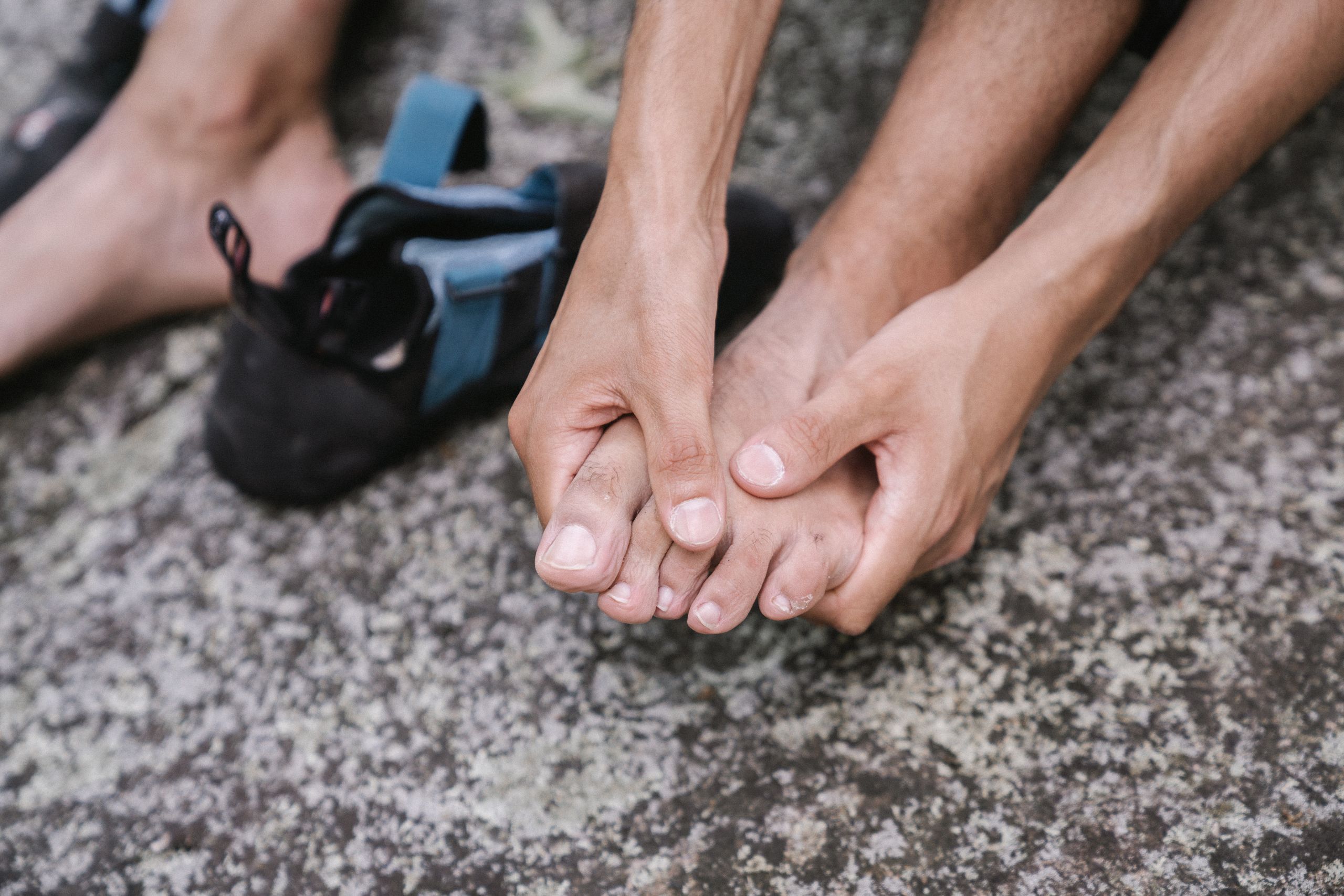
What’s Turf Toe? Causes, Symptoms, Treatment, and Recovery Tips
A single misstep on artificial turf can sideline an athlete for weeks.
Turf toe—a hyperextension injury of the big toe’s metatarsophalangeal joint—is more than a minor sprain.
Research links artificial surfaces to higher injury rates, making it essential for athletes and coaches to understand this condition.
This article covers the anatomy behind turf toe, its causes, symptoms, diagnosis, and the treatment and prevention strategies that protect performance.
- Performance Features: The turf toe brace for big toe is designed by a podiatrist to treat injuries to the foot and aid in relieving pain due to arthritic feet. Made with medical grade compression, this patent pending design distributes forces across the length of the entire metatarsal. Avoid other harsh treatments with this dynamic tension turf toe splint.
- Targeted Conditions: TT3 turf toe brace for athletes provides continuous relief from turf toe injury, fractured or broken big toe support, hallux limitus, arthritic toes, flexor tendonitis, metatarsalgia/sesamoiditis in a protective, supportive, and comfortable split-toe design which makes this a go-to for relief and comfort during any activity.
- Comfort-Fit-Support: The sesamoiditis brace is light-weight design and soft-flex splint provides support to the foot and toes to keep your feet healthy in a more wearable option. Three targeted zones of compression promote circulation, reduce friction and swelling, pressure and aid recovery.
- Quality Materials: The sprained toe support brace is made with the highest quality micro-nylon/Lycra combination; moisture-wicking, makes our sleeves breathable by eliminating sweat and moisture build-up.
- Great Customer Support: OrthoSleeve products are backed by a 100% customer satisfaction guarantee. With proper care, hand washing and air dry, OrthoSleeve products are made to provide lasting support for up to six months.
Last update on 2026-11-25 / Affiliate links / Images from Amazon Product Advertising API
What Is Turf Toe? A Definition
Turf toe is a sprain of the metatarsophalangeal (MTP) joint at the base of the big toe, caused by forced hyperextension and first described in 1976 among American football players on artificial turf.
Unlike a simple stubbed toe, which is a brief impact injury to the toe itself, turf toe is a soft-tissue athletic injury involving the ligament and capsule that stabilize the joint.
The term was coined in a 1976 study by Bowers and Martin, who examined University of West Virginia football players competing on the newly popular artificial surfaces of that era.
The defining mechanism is forced dorsiflexion, meaning the big toe is bent upward beyond its normal range while the foot bears weight. This often happens under axial load, when force drives through a planted foot, or with valgus stress that pushes the joint sideways.
The result is damage to the plantar plate, the capsule, and the collateral ligaments around the hallux rather than a break in the bone. That distinction matters because the injury is a sprain, not a fracture, though the two can feel similar in the moment.
While turf toe is most associated with football, it also affects athletes in soccer, basketball, and other cleated sports that involve running, jumping, and hard toe-off.
Shoe flexibility and field surface both play a role, since stiff cleats on firm artificial turf can load the joint more aggressively. This isn’t limited to elite players; anyone who repeatedly drives the big toe into extension under load can develop it.
Why it matters: an untreated turf toe can linger and become chronic, leading to joint instability, stiffness, and limited range of motion that disrupts daily walking and sport.
Recognizing the mechanism early helps separate it from a stubbed toe and guides the right recovery path.
The Anatomy Behind Turf Toe
The big toe’s stability depends on a complex interplay among the first metatarsal, proximal phalanx, two sesamoid bones, and the plantar plate—structures that are strained during a turf toe injury.
When the toe is forced upward beyond its normal range, these tissues absorb the stress.
Understanding this anatomy helps explain why turf toe causes such nagging pain and stiffness. The injury isn’t a simple bruise; it’s damage to the joint and its supporting soft tissues.
The two sections below break down the metatarsophalangeal joint itself and the ligaments and soft tissues that hold it together.
The Metatarsophalangeal (MTP) Joint
The first MTP joint connects the first metatarsal to the proximal phalanx and normally allows about 65-75 degrees of dorsiflexion, the exact motion that becomes excessive in turf toe.
Plantarflexion, bending the toe downward, typically reaches roughly 30-40 degrees.
Think of it as a hinge under load. Two small sesamoid bones, medial and lateral, sit embedded in the flexor hallucis brevis tendon beneath the metatarsal head. They act like pulleys and bear significant weight during toe-off with every step.
During running and jumping, this joint must absorb forces of up to two to three times body weight. That load is manageable when motion stays within range, but forced hyperextension pushes the joint past its limits.
Because the big toe carries so much of the push-off demand, even a minor sprain here can make walking and sport feel difficult. The joint’s structure explains why proper footwear and surface choice matter so much.
Ligaments and Soft Tissue Involved
The plantar plate, a thick fibrocartilaginous structure under the MTP joint, is the primary stabilizer injured in turf toe, along with the medial and lateral collateral ligaments and the joint capsule.
Each structure resists a different direction of stress.
- Plantar plate: the main guard against hyperextension of the big toe
- Collateral ligaments: resist valgus and varus stress from side to side
- Joint capsule: surrounds and stabilizes the joint
- Flexor hallucis brevis tendon: anchors the sesamoids and aids push-off
Injury severity depends on which structures are torn and how badly. This is the basis for the grade I, II, and III sprain classification used in diagnosis and treatment planning.
The plantar plate is often the site of chronic turf toe because its limited blood supply slows healing. Repeated trauma can leave lingering inflammation, tenderness, and joint instability if the area is not given time to recover.

- PRECISE RELIEF: With a soft design that wraps fully around your foot, the Arctic Flex Hot and Cold Bunion Ice Sleeve provides targeted relief for bunion pain and discomfort. With a versatile design, you can choose from soothing heat therapy or stimulating cold therapy. Alleviate inflammation and stiffness with this specially designed sleeve
- WIDE RANGE OF USES: This sleeve is suitable for dealing with post-injury recovery, managing arthritis-related discomfort, or easing muscle soreness. With a soft material and flexible gel pack, this sleeve comfortably contours to the shape of your foot for specialized relief that stays in place
- EXCEPTIONAL DURABILITY: Crafted from durable and comfortable materials, this bunion sleeve ensures longevity for repeated use. Whether you require daily relief or more intermittent use, you can rest assured that this sleeve is designed to withstand the test of time and provide sustained relief from bunion pain
- FLEXIBLE AND ADAPTIVE GEL TECHNOLOGY: Harnessing cutting-edge gel innovation, our bunion sleeve incorporates a gel pack that seamlessly conforms to the unique contours and shape of your foot. This adaptable gel technology ensures a customized fit, enveloping your bunion in soothing relief and optimizing its effectiveness for your specific needs
- COMPLETE PACKAGE INCLUDED: Each order includes two bunion ice sleeves designed specifically for left and right feet, along with a convenient freezer bag for proper storage and temperature maintenance between uses
Last update on 2026-11-25 / Affiliate links / Images from Amazon Product Advertising API
How Turf Toe Happens: Causes and Mechanisms
Turf toe typically occurs when the forefoot is fixed to the ground while an axial load drives the heel upward, forcing the big toe into extreme dorsiflexion beyond its normal 65-75 degree range.
This forced dorsiflexion is the most common pathway to injury.
A second mechanism involves valgus or varus stress, where side-to-side force bends the metatarsophalangeal joint beyond its limits. This can strain the collateral ligaments rather than the plantar structures.
The sections below explain how hyperextension injuries unfold step by step, and why the choice between artificial turf and natural grass changes the forces at play.
Hyperextension Injuries
A hyperextension injury happens when a player’s cleat grips the surface, and another athlete lands on their heel or pushes them forward, driving the MTP joint past its limits—a scenario common among football linemen and sprinting soccer players.
The sequence usually follows a predictable pattern.
- The forefoot stays planted as the cleat locks into the field surface.
- An external force, such as an opponent’s weight, a sudden stop, or a hard push-off, drives the heel upward.
- The MTP joint is forced into extreme dorsiflexion.
- The plantar plate and joint capsule stretch or tear under the load.
Consider a football lineman pushed from behind during a block, a soccer player planting a foot to shoot, or a basketball player landing from a rebound on a flexed toe. In each case, the axial load travels through a foot that cannot move.
Severity depends on the applied force and whether valgus or varus stress adds a twisting component. Stiff cleats amplify the force because the shoe resists bending and transfers more energy into the joint.
Artificial Turf vs. Natural Grass
Studies from the 1980s and 1990s linked higher turf toe rates to first-generation artificial turf, but modern infill turf has narrowed the gap, though shoe-surface interaction remains the key risk factor. Early surfaces were hard, abrasive, and generated high friction.
Modern infill turf is softer but still offers more grip than natural grass. Grass gives way underfoot, letting the toe slide or sink slightly and releasing some of the load.
Greater friction on turf means the forefoot locks in place while the body keeps moving, sending the force straight into the MTP joint.
Research from that era suggested turf toe incidence was up to ten times higher on early artificial turf. Current turf is safer, but not risk-free, so players should treat the surface and shoes as one system.
Shoe choice matters as much as the surface. Stiff cleats with many studs increase grip and load. A shoe with a flexible forefoot and fewer studs lets the toe bend naturally, reducing strain on the plantar plate during push-off and toe-off.
Common Symptoms and Warning Signs
The hallmark signs of turf toe are immediate pain at the base of the big toe, swelling within 24 hours, and difficulty pushing off or bearing weight, often with visible bruising along the sole.
This athletic injury affects the metatarsophalangeal joint, where the first metatarsal meets the proximal phalanx of the hallux.
Symptoms usually follow a predictable order.
Recognizing this sequence helps you judge severity and decide how quickly to act.
- Immediate sharp pain at the MTP joint, felt right at the moment of forced hyperextension.
- Swelling and stiffness that build within hours as inflammation sets in around the capsule and plantar plate.
- Bruising on the plantar surface of the toe, typically appearing within one to two days.
- Tenderness to touch directly under the joint, especially along the sesamoid bones.
- Limited dorsiflexion, meaning you cannot bend the big toe upward through its normal range of motion.
- Difficulty walking or pushing off during a step, since toe-off loads the injured ligament.
These signs point to a sprain of the supporting structures rather than a simple stub. A physical examination often confirms tenderness and reduced motion before imaging is considered.
Acute symptoms flare sharply after the trauma and usually settle with time. Chronic turf toe looks different: persistent stiffness, joint instability, and pain that returns with activity rather than fading.
Chronic cases often reflect an untreated or repeated grade I or grade II sprain. Over time, the capsule and ligaments may fail to heal properly, leaving the joint loose and prone to further injury.
Watch for pain that lingers for weeks, a toe that feels unstable during running or jumping, or discomfort that worsens with each practice. These patterns suggest the injury never fully resolved.
When to see a doctor: Seek medical evaluation if you cannot bear weight on the foot, have severe or rapidly worsening swelling, or see no improvement after 48 to 72 hours of rest and ice.
These warning signs may indicate a higher-grade sprain, a sesamoid fracture, or another condition that needs proper diagnosis. A sports medicine or podiatry professional can distinguish turf toe from gout, sesamoiditis, a bunion, or a fracture through examination and, when needed, X-ray or MRI.
Early assessment matters because the right diagnosis guides recovery time and lowers the risk of long-term joint instability or arthritis.

- ONE SIZE FITS MOST – The turf toe protector is available in a right or left version, fitting US Men’s shoe sizes 5.5 – 14 and US Women’s shoe sizes 7 – 15 with a foot arch circumference max of 11”.
- ALLEVIATES BIG TOE PAIN – Soft effective taping treatment for a wide variety of big toe deformities and injuries including turf toe, hallux rigidus, sprains or strains, and MTP joint hyperextension. May potentially relieve sesamoiditis, bunions, and arthritis for some.
- SOFT and FLEXIBLE FIT – More comfortable than a carbon fiber foot plate insert or steel shoe insole extension orthotic, the flexible great toe brace prevents excessive flexion (bending) while allowing you to maintain an active lifestyle.
- LIGHTWEIGHT and BREATHABLE – Made with an open-cell foam for a comfortable and cool fit throughout the day. The turf toe splint will not slip or bunch and can easily be worn with socks and most styles of shoes, thanks to its medical-grade fasteners and non-slip backing.
- ADJUSTABLE TOE STRAPS – Providing protection and support, the turf toe brace uses two tension straps to supply constant, gentle pressure on your big toe, keeping it in proper alignment to speed up the recovery process.
Last update on 2026-11-25 / Affiliate links / Images from Amazon Product Advertising API
How Turf Toe Is Diagnosed
Diagnosis starts with a physical exam, palpating the metatarsophalangeal joint and testing range of motion, followed by X-rays to rule out fracture, with MRI reserved for suspected grade II-III tears or unclear cases.
A clinician who understands the mechanism of injury can usually narrow the picture quickly.
The goal is to confirm a plantar plate and capsule sprain, measure how much instability exists, and exclude other causes of big toe pain. Each step builds on the last, so the exam findings guide which imaging tests are actually needed.
History. The clinician asks how the injury happened, when it started, and which sport or activity was involved. A clear moment of forced dorsiflexion during pushing off, jumping, or a tackle strongly points to turf toe.
Timing matters too. Sudden pain after a specific play suggests an acute injury, while weeks of gradual soreness hint at a chronic issue or an entirely different condition. Details about cleats, footwear, and artificial turf help fill in the mechanism.
Physical examination. The examiner palpates along the metatarsophalangeal joint to locate tenderness, often at the plantar surface under the big toe.
Pain with dorsiflexion, especially when an axial load is applied to the toe, is a classic sign of a plantar plate sprain.
Valgus and varus stress tests assess collateral ligament stability. The clinician notes limited range of motion, swelling, and bruising around the hallux and compares the injured toe with the healthy side.
X-ray. Plain films are the first imaging step and mainly rule out fracture. They can reveal a sesamoid fracture, a bone chip at the joint, or signs of arthritis that could explain chronic pain.
X-rays cannot show soft-tissue damage, so a normal film does not rule out turf toe. When the exam suggests a significant ligament injury, the next step is usually an MRI.
MRI. Magnetic resonance imaging is the gold standard for soft-tissue damage. It shows the plantar plate, capsule, and collateral ligaments in detail and can grade partial versus complete tears.
MRI is reserved for suspected grade II-III sprains, cases that fail to improve, or situations where the diagnosis is unclear. It also helps surgeons plan operations in severe cases.
Turf toe is graded I to III based on how much ligament damage exists, and that grade guides treatment. Grade I is a mild sprain with microscopic tearing and little instability. Grade II involves a partial tear with more pain and stiffness. Grade III is a complete tear with clear joint instability.
Several other conditions can mimic turf toe, so a careful differential diagnosis is essential. The table below highlights the key distinguishing features and tests clinicians use to differentiate them.
| Condition | Distinguishing Feature | Test |
|---|---|---|
| Gout | Sudden onset, marked redness, often no trauma | Elevated uric acid, joint fluid analysis |
| Sesamoiditis | Gradual onset, no specific injury event | Focal tenderness under the sesamoids, imaging |
| Bunion | Chronic deformity at the base of the big toe | Visual inspection, X-ray |
| Stress fracture | Point tenderness, pain with weight-bearing | X-ray changes, bone scan or MRI |
Gout tends to flare quickly and often brings visible redness, while sesamoiditis builds slowly without a trauma story.
A bunion shows a long-standing deformity, and a stress fracture produces sharp point tenderness with bone changes on imaging.
Getting the grade and the diagnosis right matters because it shapes the treatment plan. A grade I sprain may need only rest and taping, while a grade III tear can require immobilization, physical therapy, or surgery in severe cases.
Treatment and Recovery Options
Treatment ranges from RICE and a stiff-soled shoe for grade I sprains to immobilization or surgery for grade III tears, with return-to-play timelines from a few days to 12+ weeks. The approach depends on how much damage the plantar plate and surrounding capsule have sustained.
Grade I sprains usually respond to conservative care. Grade II injuries often need immobilization plus physical therapy. Grade III tears may call for surgery, especially in athletes who push off hard.
The subsections below cover at-home care and medical or surgical interventions. Recovery time varies by grade, from roughly 3-7 days for mild sprains to 6-12+ weeks for severe ones.
At-Home Care and Rest
For grade I turf toe, start with the RICE protocol: rest, ice 15-20 minutes every 2-3 hours, compression wrap, and elevation, plus a stiff-soled shoe or walking boot to limit MTP motion.
These steps reduce inflammation and protect the metatarsophalangeal joint while it heals.
Follow these steps in order during the first days after injury:
- Rest and offload. Avoid pushing off, running, jumping, and any activity that bends the big toe upward.
- Ice. Apply for 15-20 minutes every 2-3 hours during the first 48-72 hours.
- Compression. Use an elastic wrap to control swelling, but keep it snug, not tight.
- Elevation. Keep the foot above heart level when possible to limit fluid buildup.
- NSAIDs. Ibuprofen 400mg every 6-8 hours with food can ease pain, if you have no contraindications.
- Taping or strapping. Limit dorsiflexion of the big toe to protect the healing ligament.
- Stiff-soled shoe or walking boot. This reduces bending at the joint with each step.
Avoid heat and massage in the first 48 hours, since both can increase swelling. Over-the-counter orthotics can also help offload the joint and ease pressure on the sesamoid bones.
For grade I sprains, return to activity typically takes 3-7 days with gradual progression. Add walking before jogging, and jogging before sprinting or cutting.
- Our adhesive backed bandages keep your big toe from bending while you’re engaging in your favorite sport. Don’t let joint pain in your big toe stop you from enjoying life. Heal and protect a big toe injury with ZenToes Turf Toe Straps.
- Made from moleskin for the best protection available. Moleskin is strong and durable, providing the support necessary to keep the big toe joint straight, and helping you to heal quickly from a metatarsophalangeal joint sprain.
- Our unisex Turf Toe Splints can be worn on either foot, are one size fits most, and come in a pack of 10. The strong adhesive on these strips will last all day, during your entire football practice, dance recital, tennis or soccer game.
- If you are an athlete, you may have experienced the excruciating pain of “death toe” in the join of your big toe. Better than a taping treatment, our turf toe straps keep your toe from bending at the joint, helping it to heal while preventing pain.
- We understand foot pain, which is why we at ZenToes strive to provide the highest quality foot pain relief products available.
Last update on 2026-11-25 / Affiliate links / Images from Amazon Product Advertising API
Medical and Surgical Interventions
Grade II-III turf toe may require a walking boot for 2-4 weeks, physical therapy for range-of-motion and strengthening exercises, and, in rare cases of complete plantar plate rupture, surgical repair.
A doctor or sports medicine specialist can confirm the grade through physical examination and imaging such as X-ray or MRI.
Physical therapy usually runs 4-8 weeks and focuses on restoring motion and strength.
Common exercises include:
- Toe curls and towel scrunches to strengthen the flexor hallucis brevis and intrinsic foot muscles
- Calf raises to build push-off power without stressing the toe
- Range of motion exercises for the big toe to reduce stiffness
- Proprioception and balance drills to retrain joint control
Surgery is reserved for elite athletes or cases of persistent instability, and it remains uncommon. Procedures may include plantar plate repair or sesamoidectomy.
Risks include stiffness, nerve injury, and later arthritis.
Untreated chronic turf toe can lead to joint instability and early arthritis of the big toe. Seek care from podiatry, orthopedics, or sports medicine if pain, swelling, or limited range of motion persists beyond a few weeks.
Prevention Tips for Athletes
Preventing turf toe starts with flexible forefoot footwear, avoiding overly stiff cleats on artificial turf, and conditioning the foot and ankle to tolerate load. The injury happens when the big toe is forced into hyperextension at the metatarsophalangeal joint, straining the plantar plate and capsule.
Small choices about shoes, surfaces, and training habits can lower that risk.
No single step removes the risk entirely. Instead, stack several habits together: pick the right shoe, respect the playing surface, warm up the toe and ankle, build foot strength, and manage training load. Athletes with a prior sprain or a loose MTP joint should be especially careful.
1. Choose flexible forefoot shoes. Stiff cleats with many studs can lock the forefoot and concentrate force on the big toe during push-off and toe-off. Look for footwear with a forefoot that bends naturally, and consider turf-specific shoes for artificial surfaces.
2. Select an appropriate surface. Natural grass remains the most forgiving option when it is available. On synthetic fields, modern infill turf tends to offer more give than older, harder AstroTurf, so check what you are playing on before lacing up.
3. Warm up with toe and ankle mobility drills. Spend five to ten minutes on gentle range-of-motion work before activity. Toe raises, ankle circles, and slow calf stretches prepare the hallux and surrounding structures for the demands of running, jumping, and cutting.
4. Strengthen the intrinsic foot muscles and calf complex. Toe curls and towel scrunches target the small muscles that support the first metatarsal and sesamoid bones. Calf raises and eccentric heel drops build the push-off chain that shares load with the big toe.
5. Use taping or orthotics when indicated. Athletes with a previous turf toe injury or a hypermobile MTP joint may benefit from strapping that limits hyperextension. A suitable orthotic can also reduce strain on the plantar plate and capsule during sport.
Load management matters too. Avoid sudden jumps in training volume, since fatigue and repeated forced dorsiflexion raise the chance of an acute or chronic sprain. Build intensity gradually across weeks rather than cramming sessions together.
Coaches and athletes can use a short checklist before every session:
- Check that shoes bend at the forefoot and suit the surface
- Confirm the field condition and choose grass when possible
- Complete five to ten minutes of toe and ankle mobility work
- Include toe curls, towel scrunches, and calf strengthening in weekly training
- Tape the big toe or use orthotics if there is a prior injury or joint laxity
- Review training load for any sharp increases in volume or intensity
- Report early pain, swelling, or stiffness in the big toe rather than pushing through it
These habits support the ligaments and capsule around the metatarsophalangeal joint and reduce the chance of a painful hyperextension sprain.
Consistent prevention is far easier than rehabilitation after a significant toe injury.

- Adjustable for Customized Fit: Find the perfect fit with the adjustable straps of our multi adhesive tape fixation; The toe brace for men’s versatile design allows you to customize the level of compression and support for your unique needs; Enjoy a secure and comfortable fit that toe brace for women adapts to your foot shape and size; Size: 25.5 x 11.5 x 7.5cm / 10 x 4.5 x 3 inch
- Breathable and Comfortable: Breathe easy with the breathable fabric of our toe corrector; Engineered to promote airflow, hallux valgus correction splints prevents excessive moisture and odor build up, toe support brace ensuring a comfortable wearing experience throughout the day
- Straighten Toes: In addition to its protection and support, the big toe straightener brace also provides gentle, corrective pressure on the big toe to realign it and slow the progression or formation of hammer toe corrector brace helps improve poor posture while preventing chafing
- Firm Support: Designed for comfort, this orthopedic corrector is soft, flexible, and conforms to the shape of your foot, orthopedic splint provides gentle yet firm support, preventing excessive bending of the toe while allowing you to maintain an active lifestyle
- Widely Use: Toe big toe support brace and foot drop braces is an effective solution that offers correction for big toe joint such as hallux valgus, overlapping toes caused by sports from wearing tight footwear
Last update on 2026-11-25 / Affiliate links / Images from Amazon Product Advertising API
Frequently Asked Questions
What is turf toe, exactly?
Turf toe is a sprain of the ligaments and soft tissue around the big toe joint, specifically the metatarsophalangeal (MTP) joint. It typically happens when the toe is forced into extreme hyperextension—bent upward beyond its normal range—stretching or tearing the ligaments under the joint. Despite the name, it isn’t limited to artificial turf; it can occur on grass, hardwood, or any surface during sports like football, soccer, basketball, gymnastics, and even dancing.
Why is it called turf toe if it can happen anywhere?
The name became popular in the 1970s when American football players on new artificial turf fields started reporting the injury in large numbers. Those early turf surfaces were harder and less forgiving than natural grass, so players’ toes jammed into the surface with more force. Today we know that turf toe refers to the mechanism of injury—forced upward bending of the big toe—rather than the playing surface itself, which is why athletes in many different sports can develop it.
What are the common symptoms of turf toe?
Symptoms usually include pain and tenderness at the base of the big toe, swelling, stiffness, and limited range of motion. You may notice bruising around the joint, and pushing off or bending the toe upward often worsens the pain. In more severe cases, the joint may feel unstable, or you may be unable to bear weight comfortably. Symptoms can range from mild discomfort that eases with rest to sharp pain that persists even with normal walking.
How is turf toe graded, and does severity matter?
Yes, severity matters a lot for treatment and recovery. Turf toe is generally graded from 1 to 3. Grade 1 is a mild ligament stretch with little swelling and usually resolves in days to a couple of weeks. Grade 2 involves a partial ligament tear with moderate pain, swelling, and bruising, and often takes several weeks to heal. A grade 3 is a complete tear with significant instability and may require a longer recovery, immobilization, or, in some cases, surgery. A doctor can assess the grade through examination and, if needed, imaging.
What should I do right after a turf toe injury?
Start with rest, ice, compression, and elevation—the classic RICE approach—during the first 48 to 72 hours. Avoid pushing through the pain, since continuing to stress the joint can worsen the sprain. Over-the-counter anti-inflammatory medication may help with pain and swelling if your doctor approves. If you can’t put weight on the foot, the toe looks deformed, or pain is severe, see a healthcare professional promptly to rule out fractures or more serious damage. Knowing what turf toe is and how to treat it early can prevent it from becoming a nagging, long-term problem.
How can I prevent turf toe from happening again?
Choose footwear with a firm, stiff sole and good toe-box support, since flexible shoes let the toe hyperextend more easily. A proper warm-up and a gradual return to activity after injury help rebuild strength and flexibility. Some athletes use toe taping or orthotic inserts to limit excessive bending of the big toe joint. Strengthening the foot and calf muscles, plus maintaining good ankle mobility, can also reduce strain on the toe. If you play on hard surfaces, consider whether your cleats or shoes are appropriate for that field.
