Foot Problems – Dry Skin and Cracked Heels
Dry skin on any part of the body can be annoying and can cause flaking and cracking of the skin, redness due to scratching, and unsightly patches of thick/hard skin.
However, when dry skin occurs on the feet, the symptoms of discomfort are magnified due to shoe wear, the stretching of the skin on the feet each time we step down, and certain synthetic materials in the socks and shoes that dry the skin out even more.
Because of the confining nature of the shoes we wear and the lack of fresh air that hits the skin of the feet due to our socks and shoes, dry feet need specialized care to prevent pain.
The heels of the feet are the areas that seem to be the most prone to develop dry, hard, and painful cracks or fissures.
Even though the following discussion centers on the heels, this information applies to all areas of the feet that present with dry, hard, and cracked skin.
Cracked heels are often called “fissures” and are usually caused by dry skin.
For most people, this is a nuisance and a cosmetic problem; however, when the fissures are deep the skin becomes painful.
If treatment is not initiated early, not only can the pain become intense, but the cracks/fissures may bleed.
Once bleeding occurs, the skin and athletes’ feet are prone to bacterial infections.

- An intensely hydrating proprietary blend that softens, hydrates and moisturizes dry, cracked heels
- Smooths and fills heel cracks
- Specially designed to heal and repair dry skin, leaving a rich, moisturizing layer of protection
- Soothes irritated and inflamed dry skin
- Safe for diabetics

Last update on 2026-10-12 / Affiliate links / Images from Amazon Product Advertising API
The symptoms of dry feet, especially the heels, can include:
Peeling and flaking skin.
The skin may appear yellow or brown and may become inflamed due to itching and scratching The dry skin may become thick and hard, especially around the edges of the heels.
The feet may become painful while walking. This discomfort is increased when walking barefoot, in thin-sole shoes, or open-back shoes If the cracks are deep, bleeding may occur.
Dry and cracked skin is prone to bacteria and fungal infections, which can cause serious problems.
The causes of dry skin and cracked heels include:
Inactive sweat glands. This is usually due to the genes we inherit.
Obesity. Extra weight on the feet will destroy sweat glands.
Years of prolonged standing in one spot will also destroy sweat glands.
Using excessively hot water when bathing will affect and reduce sweat gland activity.
Certain chronic skin problems such as eczema and psoriasis.
Biomechanical foot defects cause abnormalities in how we walk, which causes certain areas of the feet to bear abnormal amounts of weight.
This abnormal weight not only destroys sweat glands in these areas, but produces areas of thick, hard, and dry skin.
Some of the more common biomechanical defects which will produce this problem are:
Flat feet
High arches
Pronation: The skin of the feet, has no oil glands and must rely on the sweat glands to moisturize the skin. The lack of oil glands makes preventing dry skin difficult, but, if we had oil glands on our feet, we would slip and slide with each step we took.
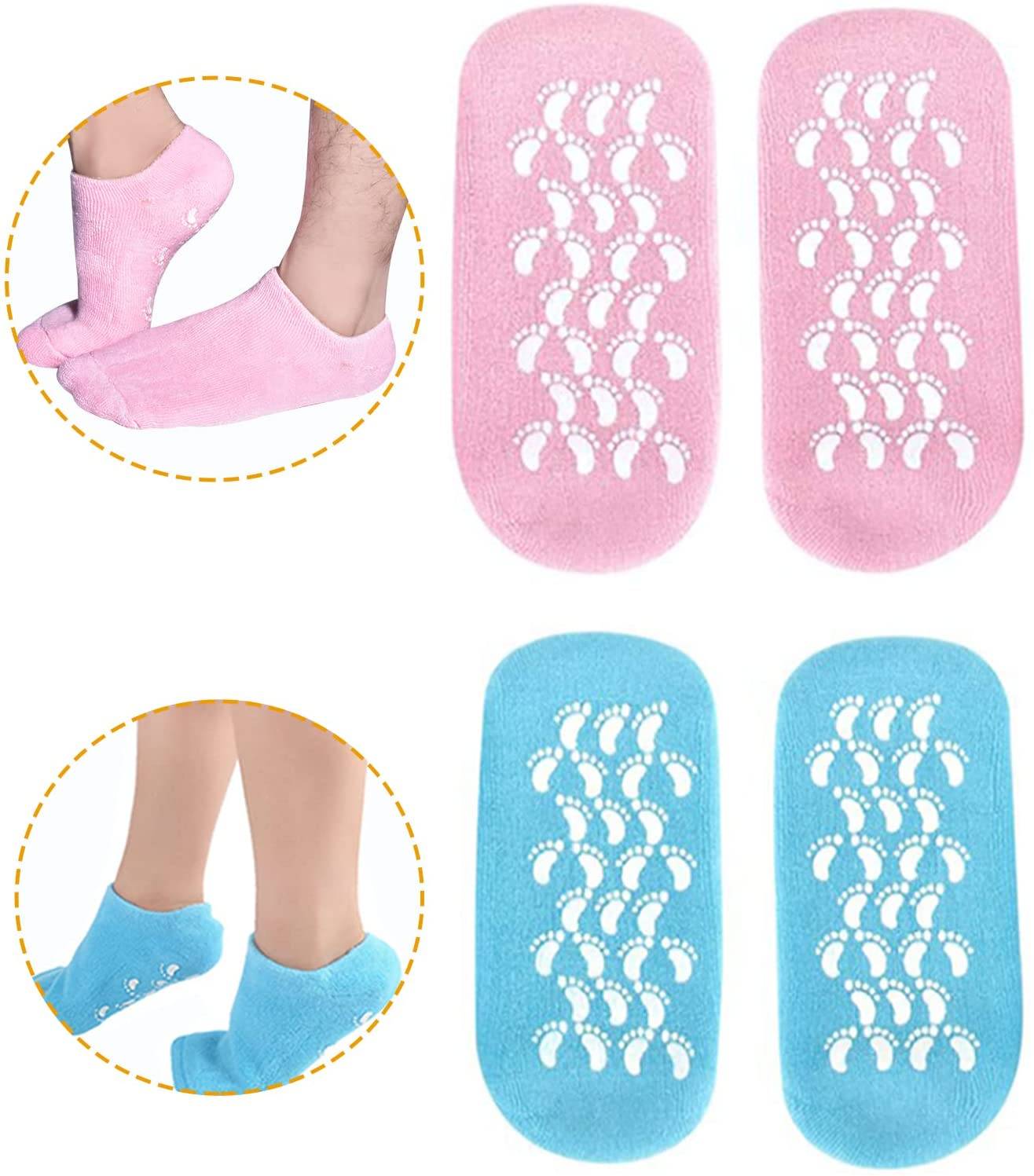
Gel Dry Skin Therapy Socks
These socks are uniquely effective in treating and preventing dry, cracked skin without the use of messy lotions. Powerful treatment but gentle enough to be approved for diabetics. The socks are lined with Silipos’ proprietary soft polymer fragrance-free gel that comfortably conforms to your feet while gradually releasing medical-grade mineral oil to moisturize and lubricate the skin.
The gel is hypoallergenic, does not support bacterial growth, and has been dermatologist-tested. The cotton/nylon/Lycra socks are latex-free and have a non-restrictive cuff that keeps them from falling down but does not restrict circulation.
Gel Therapy Socks are washable and reusable and, when worn at least two to three times per week, will provide moisturizing benefits for months, depending on frequency and length of use. These socks come as a pair, one-size-fits-all.
Dry skin and cracked heels are common foot problems that many people experience.
These issues can be uncomfortable and even painful, but you can take steps to alleviate and prevent them.

- Our soft spa heel socks provide intensive hydration treatment to enhance healing.
Last update on 2026-10-12 / Affiliate links / Images from Amazon Product Advertising API
Here are some tips for dealing with dry skin and cracked heels:
- Moisturize: Regularly apply a thick moisturizer to your feet, especially after bathing or showering. Look for products that contain ingredients like shea butter or urea, as these can help hydrate and soften the skin.
- Exfoliate: Use a gentle foot scrub or pumice stone to remove dead skin from your feet. This can help prevent the buildup of dry, rough skin that can lead to cracking.
- Soak your feet: Soaking your feet in warm water can help soften the skin and make it easier to remove dead skin cells. You can add a few drops of essential oils or Epsom salt to the water for added relaxation and benefits.
- Wear appropriate footwear: Avoid wearing shoes that are too tight or don’t provide enough support. Opt for shoes made of breathable materials that allow air circulation around your feet.
- Use heel balms or creams: Specialized heel balms and creams that target dry, cracked heels are available. These products often contain ingredients like salicylic acid or lactic acid, which can help exfoliate and soften the skin.
- Stay hydrated: Drinking plenty of water can help keep your skin hydrated from the inside out. Aim for at least 8 glasses of water daily to maintain good overall hydration.
- Protect your feet: When walking barefoot or on rough surfaces, consider wearing socks or slippers to protect your feet from further damage.
If you find that your dry skin and cracked heels persist despite these measures, it may be helpful to consult a podiatrist or foot specialist for further evaluation and treatment options.