Coping With Plantar Fasciitis
Coping with plantar fasciitis can be challenging, but there are several ways to deal with the condition. These include identifying the symptoms, treatment options, and prevention.
Here are some tips to learn how to cope with this painful condition.
Treatment options
Plantar fasciitis can be a challenging condition to cope with, but several strategies can help manage the symptoms and promote healing.
Here are some tips to cope with plantar fasciitis:
- Rest and reduce activities: Give your feet time to rest and heal by limiting activities that worsen the pain. Avoid high-impact exercises and activities that put excessive strain on the feet.
- Ice therapy: Applying ice to the affected area can help reduce inflammation and alleviate pain. Use an ice pack or ice wrapped in a cloth for about 15-20 minutes several times a day.
- Stretching exercises: Perform gentle stretching exercises to help improve flexibility and reduce tension in the plantar fascia. Examples include calf stretches, towel stretches, and toe stretches.
- Supportive footwear: Wear shoes that provide adequate arch support and cushioning. Avoid high heels, flat shoes, or worn-out footwear that can worsen the condition.
- Orthotic devices: Consider using orthotic devices like shoe inserts or custom-made orthotics to provide additional support and relieve pressure on the plantar fascia.
- Physical therapy: Working with a physical therapist can help develop a personalized treatment plan, including specific exercises and techniques to address plantar fasciitis.
- Over-the-counter pain medications: Nonsteroidal anti-inflammatory drugs (NSAIDs) like ibuprofen or naproxen can help reduce pain and inflammation. However, consulting with a healthcare professional before taking any medication is important.
- Night splints: Wearing a night splint can help stretch the plantar fascia and Achilles tendon while sleeping, reducing morning pain and stiffness.
- Weight management: Maintaining a healthy weight can help reduce stress on the feet and alleviate symptoms of plantar fasciitis.
- Gradual return to activity: Once the pain subsides, gradually reintroduce activities and exercises to avoid re-injury. Listen to your body and make adjustments as necessary.
Remember, it’s essential to consult with a healthcare professional for an accurate diagnosis and personalized treatment plan for your specific condition.
You can reduce the risk of developing plantar fasciitis by avoiding activities that cause excessive strain, such as high-impact sports.
You can also reduce your risk by wearing shoes with thin soles.
However, avoiding shoes with poor arch support is important as they can increase the risk of developing plantar fasciitis.

- ✶REDUCES HEEL & FOOT PAIN – Using the ProStretch daily reduces pain and inflammation caused by plantar fasciitis, Achilles tendonitis, Sever’s disease, shin splints, and tight calves / hamstrings. The ProStretch calf stretcher isolates the lower leg muscles, tendons, and ligaments to ensure a deep, effective stretch that helps to reduce injuries.
- ✶PHYSICIAN TRUSTED & APMA ACCEPTED – This foot rocker is medically proven to be effective and found in physical therapy clinics worldwide. The gentle motion of the ProStretch provides a deeper and more effective stretch than conventional methods.
- ✶SLIP-RESISTANT PADS – The advanced rubber strips on the bottom of the ProStretch protect against moving and sliding, allowing for a safe and effective stretch. The slip-resistant pads ensure that the calf stretcher does not slide when used on any surface.
- ✶PROVEN EFFECTIVE DESIGN – The unique rocker design holds the foot in the optimal position for an accurate and efficient stretch, increasing flexibility, increasing circulation, and enhancing overall performance.
- ✶NOTES ON USE – Fits adult shoes up to size 12. The recommended weight limit is 250 lbs. Wear socks and athletic shoes while using the ProStretch.
Last update on 2026-10-12 / Affiliate links / Images from Amazon Product Advertising API
Surgical procedures may also be used to treat plantar fasciitis.
These procedures may involve a partial cut in the plantar fascia to release tension.
After the cut, the tissue is resected along the inside edge of the plantar fascia to prevent the development of a flat foot.
The surgeon may also release the abductor muscle to prevent the entrapment of Baxter’s nerve, which can cause pain. In many cases, heel spurs are also removed during the surgery.
Nonsurgical treatments for plantar fasciitis include activity modification, anti-inflammatory medications, and in-shoe orthoses.
In about 90% of patients, these nonoperative treatments eliminate pain and inflammation.
However, if these treatments are insufficient, patients may need to undergo minimally invasive treatments, such as platelet-rich plasma injections and therapeutic ultrasounds.
Home-based treatments are another common option for plantar fasciitis. A night splint can keep the foot from contracting, which helps relieve the pain.
Corticosteroid injections are another option for reducing inflammation. Your podiatrist will determine if you are a good candidate for this procedure.
Alternatively, you can get a platelet-rich plasma injection, injecting concentrated blood platelets into your foot.
These injections will help the body to heal more quickly.
Physical examination and medical history are the first steps to diagnosing plantar fasciitis.
Your doctor can determine the underlying cause by noting the location and intensity of the pain. The doctor may suggest an MRI or X-ray rule out a bone spur as the source of the pain.
While bone spurs aren’t an obvious source of plantar fasciitis pain, many people have bone spurs, which may cause heel pain.
In addition to pain management, exercise and stretching can help alleviate some of the discomfort associated with plantar fasciitis.
A physician may also prescribe anti-inflammatory medications. However, this type of treatment may only temporarily alleviate the pain.

- Immediately relieves plantar fasciitis heel pain from plantar fasciitis & heel spurs treating pain directly at the source. Prevents plantar fasciitis from coming back.
- Distributes foot pressure evenly across the foot, reducing pressure from the forefoot to the heel as you walk.
- Shock-absorbing deep heel cup manages heel inflammation, reduces stress and provides both cushioning and stability to the foot. Arch support hugs your foot in just the right spot to stop the plantar fascia from overstretching. Provides support across arch types, including high arches.
- Reduces morning plantar fasciitis pain.
- Full-length insole that can be easily trimmed to fit your shoe size.

Last update on 2026-10-12 / Affiliate links / Images from Amazon Product Advertising API
Coping With Plantar Fasciitis – Symptoms
The most common symptoms of plantar fasciitis include:
- Heel pain: The primary symptom of plantar fasciitis is pain in the bottom of the heel. This pain is usually sharp and stabbing, and it tends to be worse in the morning or after long periods of rest. It may also worsen after prolonged standing or walking.
- Foot discomfort: Some individuals with plantar fasciitis may experience a general discomfort or ache in the sole or along the arch.
- Stiffness: People with plantar fasciitis often experience stiffness and a limited range of motion in the affected foot, especially in the morning or after periods of inactivity.
- Tenderness: The bottom of the heel may be tender to touch, and pressing on the affected area can elicit pain.
- Pain with activity: Activities that involve prolonged standing, walking, running, or jumping can exacerbate the pain caused by plantar fasciitis.
It’s important to note that these symptoms may vary in intensity from person to person.
If you are experiencing any of these symptoms, it is recommended to consult with a healthcare professional for an accurate diagnosis and appropriate treatment plan.
Coping With Plantar Fasciitis – Prevention
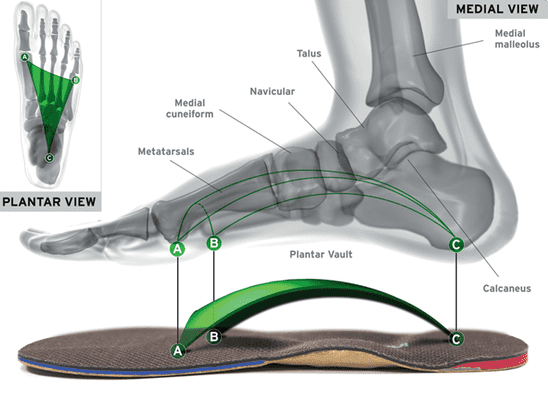
Preventing plantar fasciitis starts with understanding the anatomy of the plantar fascia. It’s an important ligament that stretches from the heel to the toes.
An injury of this tissue causes pain that can be difficult to bear.
Treatment for plantar fasciitis can include icing the affected area, which is an excellent way to reduce swelling and inflammation.
Proper footwear is the best prevention of plantar fasciitis.
Proper footwear can correct the foot’s shape and absorb shock, preventing the condition from recurring.
Orthotic shoe inserts and heel cups are excellent ways to support your arch and prevent plantar fasciitis.
Orthotics are made to fit your specific foot, so you can choose a pair with the right support.
Also, try to limit the wearing of flat-bottom footwear, which provides no arch support.
In addition to proper footwear, stretching is important to prevent plantar fasciitis.
A gentle stretching routine can relieve pain and promote healing. Ideally, you should hold this stretch for 15 to 30 seconds and repeat it two to four times.
You should always warm up before any exercise. Also, you should increase your mileage gradually, increasing the time spent on the exercise by 10 percent per week.
Avoid standing for long periods. While standing, the plantar fascia is constantly stretched and contracted, causing overuse injuries. It is important to stretch out your calves before and after exercises.
Taking breaks from work is essential for the prevention of plantar fasciitis.
You should also work with a physical therapist to check your mobility and muscle weaknesses.
A proper professional assessment is vital to ensuring a full recovery.
The first appointment should focus on assessing your lifestyle and medical history to determine the most appropriate approach.
Often, noninvasive treatments are the fastest route to recovery.
A physiotherapist can devise a customized exercise regimen for your needs.
Prevention of plantar fasciitis involves avoiding the causes of the disease. In addition to proper footwear, you should keep active to reduce the risks of the condition.
Active recovery is becoming the norm for recovering from exercise.
This recovery method is a popular alternative to traditional rest, with the added benefit of ensuring you don’t overwork the plantar fascia.
Another way to prevent plantar fasciitis is to perform simple stretches regularly.
Simple stretches to stretch the foot and the calf muscles will help your foot recover faster and prevent recurring problems.
The best stretching exercises for the foot and ankle increase flexibility and range of motion.
Coping With Plantar Fasciitis – Rear chain conditioning
Rear chain conditioning is a term commonly used in sports and fitness to refer to strengthening and conditioning the muscles on the backside of the body, particularly the posterior chain.
The posterior chain includes glutes, hamstrings, and lower back muscles.
Conditioning the rear chain is important for overall strength, stability, and athletic performance.
It can help improve posture, increase power and explosiveness, enhance athletic performance, and reduce the risk of injuries.
Here are some exercises that can help condition the rear chain:
- Deadlifts: Deadlifts are a compound exercise that targets multiple muscles in the posterior chain, including the glutes, hamstrings, and lower back. They can be performed with a barbell or dumbbells.
- Squats: Squats primarily target the quadriceps but also engage the glutes and hamstrings. Variations such as sumo squats or goblet squats can specifically target the rear chain.
- Glute bridges/hip thrusts isolate and strengthen the glute muscles. Lie on your back with knees bent, feet flat on the ground, and lift your hips off the floor while squeezing your glutes.
- Romanian deadlifts: Similar to regular deadlifts, Romanian deadlifts place more emphasis on the hamstrings. Hold a barbell or dumbbells with an overhand grip, hinge at the hips while keeping your back straight, and lower the weights while maintaining tension in your hamstrings.
- Kettlebell swings: This dynamic exercise targets the glutes and hamstrings. Start with a kettlebell between your legs, hinge at the hips to swing it back between your legs, then propel it forward using your hip thrust.
- Back extensions: This exercise targets the lower back muscles. Lie face down on a hyperextension bench or stability ball, and raise your upper body while keeping your back straight.
Remember to use proper form and start with appropriate weights or resistance. If you’re new to these exercises or have any underlying health conditions, it’s advisable to consult with a fitness professional or healthcare provider before starting a new exercise program.
Coping With Plantar Fasciitis – Final Thoughts
Plantar fasciitis can be a challenging condition to deal with, but with the right strategies and treatments, it is possible to manage the symptoms and promote healing.
Rest, ice therapy, stretching exercises, supportive footwear, and orthotic devices can all help alleviate pain and reduce inflammation.
Additionally, physical therapy, over-the-counter pain medications, night splints, weight management, and a gradual return to activity are beneficial for long-term management of plantar fasciitis.
If you experience symptoms of plantar fasciitis, it’s important to consult with a healthcare professional for an accurate diagnosis and personalized treatment plan.
They can provide guidance based on your specific condition and help you find the most effective ways to cope with plantar fasciitis.
Remember that everyone’s experience with plantar fasciitis may differ, so it’s essential to listen to your body and make adjustments as needed.
By taking proactive steps to manage the condition, you can improve your quality of life and reduce the impact of plantar fasciitis on your daily activities.