

Caring For Your Feet – Bruised Toes
Bruised toes can feel as painful as fractured toes, with comparable swelling and “black and blue” discolorations. They usually appear straight, and the injury that caused the bruise is minor.
However, if the swelling is extreme, or intense pain persists for an hour, or the toe is pale or blue and cool to the touch, then this is a medical emergency and you should immediately go the emergency room for care.
Diabetics and those with poor circulation should treat even minor toe and foot injuries with extreme care and should be seen by a doctor immediately after all injuries.
If these signs and diseases are not present, then you can try treating the injury by reading the following:
Self-treatment should begin immediately after the injury, with a careful examination of the toe:
The toe is straight and does not appear to be going in an unusual direction. If it is not straight, then click on dislocations for further information.
Gently run your finger along the sides, top, and bottom of the toe to feel for unusual “bumps or lumps” that are not present on uninjured toes. The presence of an unusual bump may mean that the toe is fractured; for information, click on fractures.
The toenail is attached, and there is no blood under the nail. If the nail is loose, or you can see a bluish or red discoloration under the portion of the nail, then this must be treated first, and you should click on toenail injuries.
Cuts, lacerations, or breaks in the skin can lead to severe infection, especially in an injured toe, where there is swelling, which may decrease the circulation to the toe. With decreased circulation, an infection can quickly set in.
If there is even a minor skin break, click on lacerated toes.
If none of the above signs are present, you probably have a bruised toe, and you can treat the toe with the following suggestions.
However, if you are unsure of the extent of the injury, go to the emergency room immediately.
The sooner you begin to treat your toe by using “R.I.C.E.,” the better you will feel:
a. Rest is very important. Take off your shoes, get off your feet, and relax.
b. Ice should be applied as soon as possible. Never apply ice directly on the toes, as the small blood vessels in the toes can easily go into spasms when subjected to extreme cold.
This can stop blood from getting to the toe and is dangerous. Ice should be applied to the top of the foot or front of the ankle so that as the blood flows under the ice, it will be cooled.
This cool blood flowing into the toe will help to reduce the swelling and pain.
Apply the ice, wrapped in a cloth or over an elastic bandage, to the foot for 30 minutes, every 2 hours, for the first three days after an injury. If the ice is uncomfortable or causes increased pain, do not continue to use it and see a doctor.
c. Compression is used to limit swelling and support the injured area. Compression should be applied to the entire foot. If applied to the toe, increased swelling will occur behind the toe or in the forefoot.
Compression should be applied with a 3-inch elastic bandage, beginning around all the toes and then going around the foot and ankle.
Before wrapping, place a small amount of cotton between the injured and the next largest toe. Gently tape the two toes together, with the cotton between them. This will reduce the motion, decrease the pain, and allow quicker healing.
The bandage should not be so tight that it causes increased pain or throbbing in the toes or foot. It should be comfortable!
Please do not remove the elastic bandage for the first 12 hours unless it becomes too tight, the pain increases, or the toes become pale or blue and cool. If any of these things happen, immediately remove all bandages and leave them off for several hours.
The normal color and temperature of the toes should return immediately. If not, see a doctor immediately! Continue until the swelling and pain subside; it could take several days.
Elevation of the leg will aid in reducing swelling and pain. Blood rushes to an injured area to increase blood cells, aiding in healing. Gravity will also force blood to the injured area.
Too many cells and fluid will pressure the injured nerves and tissues and cause increased pain and delayed healing. Keep your foot elevated so it is at least parallel to the ground or higher if it is comfortable.
Do this for at least 48 hours, or until the throbbing subsides, when you lower the leg.
Healing will occur more quickly if no pressure is on the injured toe. An Injury Shoe is designed to keep all pressure off the toes and forefoot area and allows you to walk without bending the painful toe. This shoe will decrease healing time and pain.
I have found that this shoe will reduce healing time by half and make you more comfortable during healing.
Do the above for at least three days. If there is no improvement, see a podiatrist immediately. If you see gradual improvement, continue the above course of treatment until the pain and swelling are gone.
It can take 2 to 3 weeks to heal bone bruises, so be patient!
A specially designed, rigid-sole shoe that podiatrists and orthopedic specialists prescribe to reduce pressure and friction on the foot. Its top and sides are made of a soft material that encases the foot and keeps all pressure off it.
The foot is held in place by velcro straps. The sole is a rigid but comfortable material to prevent the foot and toes from bending as you walk.
If you have fractured bones, dislocated joints, bruised toes or toenails, lacerations, blisters, or sensitive skin areas, order this shoe to speed healing and reduce pain.
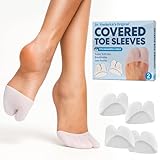
- Toe Protection and Relief: Take a step toward foot relief with Dr. Frederick’s Original Covered Toe Sleeves. Our comfortable gel sleeves are designed to protect and shield your toes, helping to relieve discomfort from overlapping toes, bunions, blisters, tailor’s bunions, metatarsalgia, corns, calluses, surgery, and more!
- Gentle Realignment and Forefoot Cushioning: Toe discomfort can ruin your day, or keep you from wearing your favorite shoes. Our Covered Toe Sleeves can help, providing soft toe cover while gently cushioning the forefoot. The gel toe caps gently separate the big toe, relieving toe rubbing and overlapping, and increasing comfort.
- Soft Breathable Gel: Softer than silicone toe protectors, our gel blend is designed to provide maximum comfort and protection for uncomfortable toes and forefoot pain. Our product is vented to help ensure proper air flow, avoiding sweaty or unhappy toes – even with all-day wear. The gel is flexible, but durable, so you’ll always be covered (and you may just forget you have ‘em on). Plus, our sleeves are washable and reusable, ensuring long-lasting relief.
- Works with Closed Toe Shoes: The perfect toe protection for women and men! Our sleeves have a one-size-fits-most design, that is perfect for nearly any closed-toe shoe. Great for work boots or heels, and carefully designed to fit snugly under socks and shoes. Banish the friction and discomfort from blisters and uncomfortable shoes!
- A Commitment To Your Satisfaction: We at Dr. Frederick’s Original are committed to your satisfaction. If you’re not fully satisfied with our Covered Toe Sleeves, we’re here to help. We’re dedicated to finding a solution that works for you, ensuring your comfort and satisfaction.
Last update on 2026-10-27 / Affiliate links / Images from Amazon Product Advertising API
Fixing Bruised Toes: Quick Tips
Experiencing a bruised toe can be quite painful, but with the right care, you can help speed up your recovery.
Here are some quick tips to help fix your bruised toes:
- Rest: Try to stay off your feet as much as possible to avoid causing further damage.
- Ice: Apply an ice pack or a bag of frozen peas wrapped in a towel on the affected area for 15-20 minutes every 2-3 hours for the first 24-48 hours after injury.
- Elevation: When seated or lying down, try to keep your foot elevated above the level of your heart. This helps reduce swelling and pain.
- Compression: Use an elastic bandage or compression sock to lightly wrap the injured toe, providing support and minimizing swelling.
- Painkillers: Over-the-counter pain relievers like paracetamol (acetaminophen) or ibuprofen may help ease pain and inflammation.
- Protective Footwear: Consider wearing comfortable, loose shoes that won’t put pressure on your injured toe.
- See a Doctor if Necessary: If you’re still experiencing severe pain after a few days, or if there’s increasing redness or discharge from the bruise, consult with a healthcare professional promptly.
Remember that while these home remedies can assist in healing minor bruises, serious injuries require professional medical attention.


